OBSAH

Endometrióza – príznaky, diagnostika a ako pomáha intímna fyzioterapia

Picture of tobe_admin

tobe_admin

Čo je endometrióza a prečo vzniká

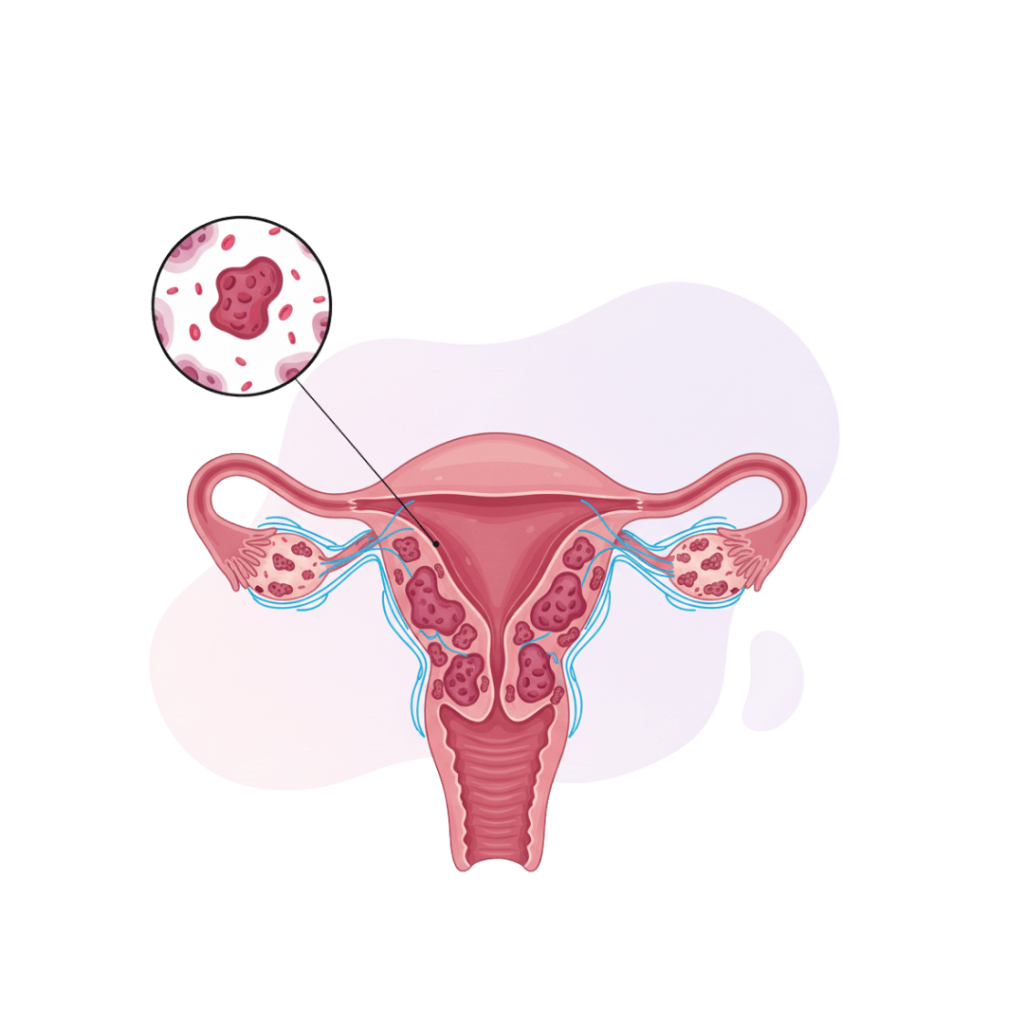
Endometrióza je chronické gynekologické ochorenie, ktoré postihuje približne každú desiatu ženu. Ide o stav, pri ktorom sa tkanivo podobné výstelke maternice (endometriu) nachádza mimo maternice – najčastejšie na vaječníkoch, vo
vajcovodoch, na močovom mechúre, v oblasti panvy či dokonca na črevách. Toto tkanivo reaguje na hormonálne zmeny v tele a môže spôsobovať opakované krvácanie, zápal a tvorbu zrastov. Presná príčina vzniku endometriózy zatiaľ nie je jednoznačná, no predpokladá sa kombinácia genetických faktorov, imunitných porúch, hormonálnej nerovnováhy a dlhodobého stresu.

Najčastejšie príznaky endometriózy

Bolestivá menštruácia – najtypickejší symptóm

Najčastejším prejavom endometriózy je extrémne bolestivá menštruácia, ktorá nereaguje na bežné analgetiká. Bolesť môže vystreľovať do krížov, stehien či celej panvy.

Tráviace ťažkosti a problémy s vylučovaním

Nadúvanie, zápchy, hnačky, bolesti pri močení či citlivosť brušnej dutiny sa objavujú najmä pri ložiskách na črevách alebo v okolí močového mechúra.

Problémy so sexom a únava

Bolestivý pohlavný styk patrí medzi najčastejšie dôvody návštev našich fyzioterapeutiek v Intimfyzio. Chronická bolesť navyše vedie k výraznej únave a psychickému vyčerpaniu.

Viac k téme sa dočítate aj v našom článku: Bolestivé gynekologické vyšetrenie a nepríjemný pohlavný styk

Ako sa endometrióza diagnostikuje

Diagnostika endometriózy nie je jednoduchá a často trvá roky. Proces začína anamnézou a gynekologickým vyšetrením. Ultrazvuk môže odhaliť typické cysty – endometriómy. V náročnejších prípadoch lekári využívajú magnetickú rezonanciu,

ktorá vie presnejšie zobraziť lokalizáciu ložísk. Definitívne potvrdenie diagnózy však prináša až laparoskopia – miniinvazívny zákrok, ktorý umožňuje ložiská priamo vidieť a diagnostikovať s istotou.

Ako sa endometrióza diagnostikuje

Liečba endometriózy býva komplexná. Zahŕňa:

– hormonálnu terapiu, ktorá potláča rast ložísk,
– chirurgické odstránenie ložísk či zrastov,
– liečbu bolesti,
– podporu trávenia, výživy a životného štýlu,
– fyzioterapiu a prácu s pohybovým aparátom.

Endometriózu nie je možné vyliečiť fyzioterapiou, no fyzioterapia výrazne pomáha redukovať jej bolestivé príznaky a zlepšiť kvalitu života. A práve v tom má svoj veľký význam.

Ako pomáha intímna fyzioterapia pri endometrióze

Ženské telo reaguje na chronickú bolesť reflexným stiahnutím svalov, zhoršením dychového stereotypu a preťažením panvovej oblasti.
Intímna fyzioterapia sa preto sústreďuje na:

Uvoľnenie svalov panvového dna

Bolesť často spôsobuje preťaženie a spazmus týchto svalov. Manuálne techniky zvnútra aj zvonka pomáhajú znížiť napätie a obnoviť funkciu.

Mobilizáciu panvových orgánov a viscerálnu terapiu

Jemná práca s orgánmi pomáha uvoľniť zrasty, zlepšiť pohyblivosť panvy a znížiť prekrvenie bolestivých oblastí.

Dychové techniky

Správne dýchanie dokáže uvoľniť panvové dno, zlepšiť cirkuláciu v panve a znížiť stresové napätie.

Prácu s jazvami po operáciách

Jazvy po laparoskopii alebo iných operačných zákrokoch môžu ovplyvniť napätie v celej brušnej dutine. Fyzioterapia ich pomáha zmäkčiť a zlepšiť ich funkčnosť.

Redukcia bolesti a zlepšenie kvality života

Cieľom nie je „vyliečiť endometriózu“, ale znížiť intenzitu symptómov, uľahčiť pohyb, zlepšiť intímny život a sexualitu, podporiť celkové zdravie ženy.

Kedy je vhodné vyhľadať intímnu fyzioterapiu

– pri bolestivej menštruácii, ktorá obmedzuje bežné fungovanie
– pri bolestivom sexe
– pri bolestiach v panve alebo krížoch
– po laparoskopickej operácii endometriózy
– pri chronickej únave a napätí v bruchu
– pri problémoch s trávením alebo panvovým dnom

CITLIVÝ PRÍSTUP

Potrebujete viac?

Ak potrebujete vedieť viac, objednajte sa 

SÚVISIACE TÉMY

→ Šestonedelie
→ Panvové dno
→ GravidityFyzio
→ KidsFyzio

The body does not need to be fixed. It needs to be understood.

I am a woman, wife, mother and physiotherapist. Over the years of practice, I have realised that health does not come only from eliminating symptoms or solving a specific problem. Real change comes when a person begins to better understand themselves, their body, and the way they live their life.

It was this idea that led me to create the space you know today as ToBe – a place where different areas of expertise, perspectives, and approaches to health are interconnected. A place that does not see a person only through a diagnosis or individual symptoms, but as a unique whole.

My professional journey began in physiotherapy and the musculoskeletal system. Over time, clients and their stories gradually led me deeper – from working with the body through the pelvic floor to understanding the meaning of emotions, the psyche, and the functioning of the nervous system. Today, I see the body as the bearer of a person’s story, and therapy as a space where we can get to know that story, understand it, and support its natural process of change.

How I work

Years of practice have taught me to slow down. To listen more. To place less emphasis on performance, results, or quick change.

In therapy, I strive to create a safe space where clients can become more aware of their bodies, their needs, and the connections between what they are experiencing and what is happening on a physical level. I don’t focus only on symptoms; I also look for their possible causes and the context in which they arise.

Over the years, I have become increasingly aware of how closely the body, mind, and nervous system are connected. This is why I naturally integrate a psychosomatic perspective and the principles of nervous system regulation into my work – gently, clearly, and always with respect for where each client is in their own process.

I believe the body has a remarkable capacity for healing and renewal. Sometimes it doesn’t need more pressure — it needs understanding, a sense of safety, and the right conditions to begin functioning in a different way.

What I can help you with

In my practice, I specialise mainly in:

  • urogynecological physiotherapy
  • pelvic floor dysfunction
  • incontinence
  • painful conditions after childbirth
  • preparation for childbirth and postpartum recovery
  • painful menstruation
  • pain during sexual intercourse
  • functional disorders of the musculoskeletal system
  • chronic pain without an organic cause
  • unintegrated scars
  • psychosomatic connections of health problems
  • regulation of the nervous system

Methods and approaches I use

In my work, I connect physiotherapy with knowledge from psychosomatics, work with the nervous system, and a holistic therapeutic approach. I mainly use:

  • urogynecological physiotherapy
  • pelvic floor therapy
  • diagnosis and therapy of functional disorders of the musculoskeletal system
  • visceral manipulation
  • osteopathic principles
  • craniosacral therapy
  • psychosomatic approach in physiotherapy
  • principles of nervous system regulation
  • knowledge from Somatic Experiencing® training

In therapy, I combine professional knowledge with a sensitive perception of the person and their story. My goal is not only to relieve the problem, but to support the client in better understanding themselves and their body.

ToBe – the concept

ToBe grew naturally out of the original IntimFyzio centre. Over time, I increasingly felt the need to bring different areas of expertise together and create a place where a person does not have to be divided into separate parts.

Today, ToBe is a multidisciplinary space where physiotherapy, psychology, psychotherapy, women’s health, traditional Chinese medicine, work with the nervous system, and other approaches come together – united by a common idea: to see a person in their entirety and create the conditions for health, growth, and a deeper connection with oneself.

Education and professional development

I studied physiotherapy at the Faculty of Medicine of Comenius University in Bratislava, and completed my master’s degree at the University of Brighton in the United Kingdom.

I have completed a specialisation in functional and structural disorders of the musculoskeletal system at the Slovak Medical University in Bratislava. I hold a licence for independent medical practice and am a member of the Slovak Chamber of Physiotherapists.

Training that has significantly shaped my therapeutic approach

  • Somatic Experiencing® (currently in training, Lilian Troost)
  • Psychosomatic approach in physiotherapy (CKP Edu, Prague)
  • Visceral manipulation and osteopathic approach (Inge Schuermans, MSc)
  • Birth trauma in physiotherapy and self-regulation tools in client practice (Mgr. Radka Tomášková)
  • Holistic approach to scar and pelvic floor therapy (PhDr. Michaela Prokešová, PhD.)
  • Traditional care for women and mothers (Angelina Miranda Martinez)
  • Osteopathic approach in pregnancy and gynaecological dysfunctions (Inge Schuermans, Jory Paul)
  • Ludmila Mojžišová method (Mgr. Jana Jedličková)
  • Physiotherapy of pelvic floor dysfunction and urinary incontinence (Prof. Magdaléna Hágovská, Mgr. Zuzana Woleková)
  • Craniosacral therapy (Mgr. Helena Toušková, Upledger Institute)
  • Certified DNS Therapist Diploma (Prof. Pavel Kolář)
  • Diagnosis and Therapy of Functional Disorders of the Musculoskeletal System (Eva Janíková)
  • Stott Pilates (Jitka Kadish)

I believe health is not a goal to be achieved. It is a relationship we build with ourselves, our bodies, and our lives – and it is a journey I love to accompany my clients on.