Intimfyzio is now ToBe
Intimfyzio is now ToBe



Intimfyzio is now ToBe
Intimfyzio is now ToBe
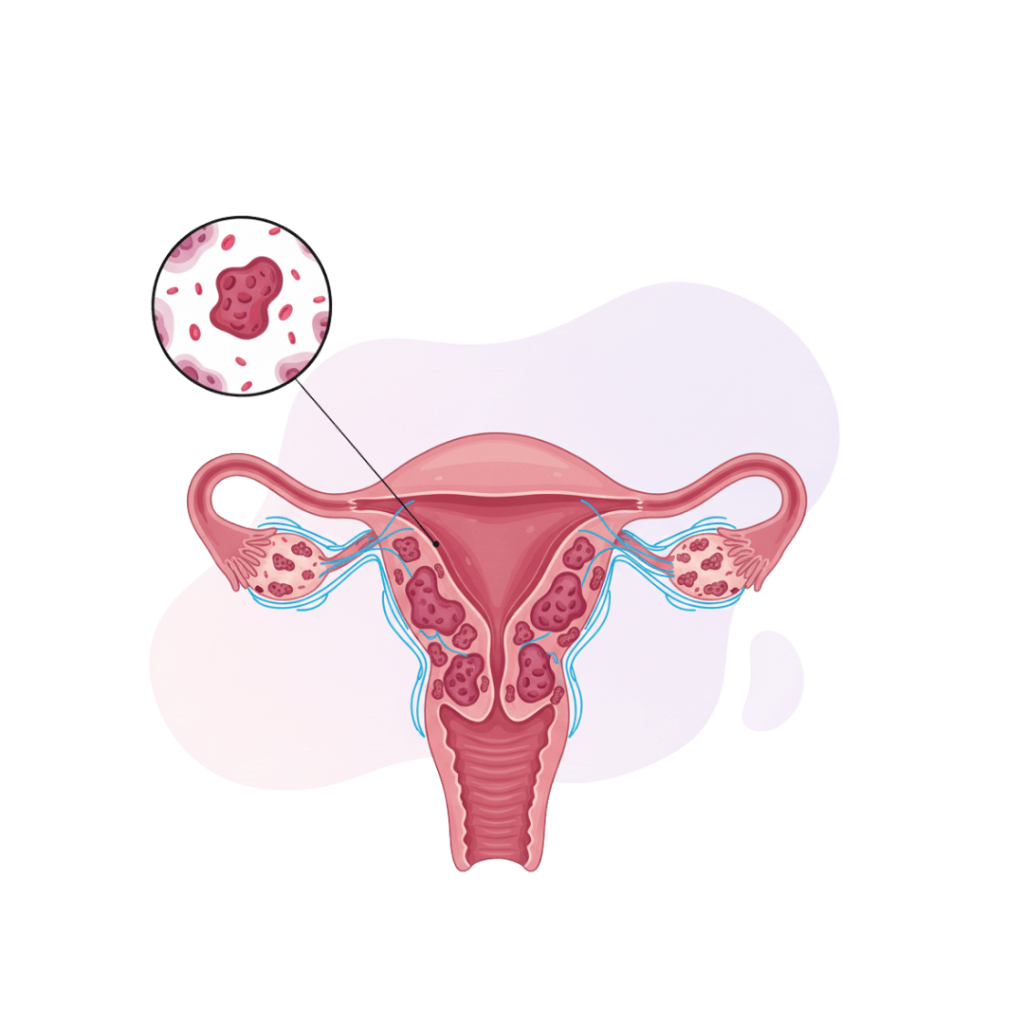
Endometriosis is a chronic gynecological condition that affects approximately one in ten women. It is a condition in which tissue similar to the lining of the uterus (endometrium) is found outside the uterus—most commonly on the ovaries, in the
fallopian tubes, on the bladder, in the pelvic area, or even on the intestines. This tissue reacts to hormonal changes in the body and can cause recurrent bleeding, inflammation, and the formation of adhesions. The exact cause of endometriosis is not yet clear, but it is believed to involve a combination of genetic factors, immune disorders, hormonal imbalances, and chronic stress.
The most common symptom of endometriosis is extremely painful menstruation that does not respond to common pain relievers. The pain may radiate to the lower back, thighs, or the entire pelvic area.
Bloating, constipation, diarrhea, pain during urination, or abdominal tenderness occur primarily when tumors are located in the intestines or near the bladder.
Painful sexual intercourse is one of the most common reasons for visits to our physical therapists at Intimfyzio. Chronic pain also leads to significant fatigue and mental exhaustion.
You can read more on this topic in our article: Painful Gynecological Exams and Uncomfortable Sexual Intercourse
Diagnosing endometriosis is not easy and often takes years. The process begins with a medical history and a gynecological exam. An ultrasound can reveal typical cysts—endometriomas. In more complex cases, doctors use magnetic resonance imaging,
which can pinpoint the location of the lesions more accurately. However, a definitive diagnosis can only be confirmed by laparoscopy—a minimally invasive procedure that allows the lesions to be seen directly and diagnosed with certainty.
Treatment for endometriosis is usually comprehensive. It includes:
– hormone therapy to suppress the growth of lesions,
– surgical removal of lesions or adhesions,
– pain management,
– support for digestion, nutrition, and lifestyle,
– physical therapy and work on the musculoskeletal system.
Endometriosis cannot be cured with physical therapy, but physical therapy significantly helps reduce its painful symptoms and improve quality of life. And that is precisely where its great importance lies.
The female body responds to chronic pain with reflex muscle contractions, impaired breathing patterns, and strain on the pelvic region.
Intimate physical therapy therefore focuses on:
Pain is often caused by overuse and spasms in these muscles. Manual techniques, both internal and external, help reduce tension and restore function.
Gentle work on the organs helps release adhesions, improve pelvic mobility, and reduce blood flow to painful areas.
Proper breathing can relax the pelvic floor, improve circulation in the pelvis, and reduce stress-related tension.
Scars from laparoscopy or other surgical procedures can affect tension throughout the abdominal cavity. Physical therapy helps soften them and improve their function.
The goal is not to “cure endometriosis,” but to reduce the severity of symptoms, make movement easier, improve intimacy and sexuality, and support a woman’s overall health.
– for painful menstruation that interferes with daily activities
– for painful intercourse
– for pelvic or lower back pain
– after laparoscopic surgery for endometriosis
– for chronic fatigue and abdominal tension
– for digestive problems or pelvic floor issues
→ Šestonedelie
→ Panvové dno
→ GravidityFyzio
→ KidsFyzio
To provide the best experiences, we use technologies like cookies to store and/or access device information. Consenting to these technologies will allow us to process data such as browsing behavior or unique IDs on this site.
The body does not need to be fixed. It needs to be understood.
I am a woman, wife, mother and physiotherapist. Over the years of practice, I have realised that health does not come only from eliminating symptoms or solving a specific problem. Real change comes when a person begins to better understand themselves, their body, and the way they live their life.
It was this idea that led me to create the space you know today as ToBe – a place where different areas of expertise, perspectives, and approaches to health are interconnected. A place that does not see a person only through a diagnosis or individual symptoms, but as a unique whole.
My professional journey began in physiotherapy and the musculoskeletal system. Over time, clients and their stories gradually led me deeper – from working with the body through the pelvic floor to understanding the meaning of emotions, the psyche, and the functioning of the nervous system. Today, I see the body as the bearer of a person’s story, and therapy as a space where we can get to know that story, understand it, and support its natural process of change.
How I work
Years of practice have taught me to slow down. To listen more. To place less emphasis on performance, results, or quick change.
In therapy, I strive to create a safe space where clients can become more aware of their bodies, their needs, and the connections between what they are experiencing and what is happening on a physical level. I don’t focus only on symptoms; I also look for their possible causes and the context in which they arise.
Over the years, I have become increasingly aware of how closely the body, mind, and nervous system are connected. This is why I naturally integrate a psychosomatic perspective and the principles of nervous system regulation into my work – gently, clearly, and always with respect for where each client is in their own process.
I believe the body has a remarkable capacity for healing and renewal. Sometimes it doesn’t need more pressure — it needs understanding, a sense of safety, and the right conditions to begin functioning in a different way.
What I can help you with
In my practice, I specialise mainly in:
Methods and approaches I use
In my work, I connect physiotherapy with knowledge from psychosomatics, work with the nervous system, and a holistic therapeutic approach. I mainly use:
In therapy, I combine professional knowledge with a sensitive perception of the person and their story. My goal is not only to relieve the problem, but to support the client in better understanding themselves and their body.
ToBe – the concept
ToBe grew naturally out of the original IntimFyzio centre. Over time, I increasingly felt the need to bring different areas of expertise together and create a place where a person does not have to be divided into separate parts.
Today, ToBe is a multidisciplinary space where physiotherapy, psychology, psychotherapy, women’s health, traditional Chinese medicine, work with the nervous system, and other approaches come together – united by a common idea: to see a person in their entirety and create the conditions for health, growth, and a deeper connection with oneself.
Education and professional development
I studied physiotherapy at the Faculty of Medicine of Comenius University in Bratislava, and completed my master’s degree at the University of Brighton in the United Kingdom.
I have completed a specialisation in functional and structural disorders of the musculoskeletal system at the Slovak Medical University in Bratislava. I hold a licence for independent medical practice and am a member of the Slovak Chamber of Physiotherapists.
Training that has significantly shaped my therapeutic approach
I believe health is not a goal to be achieved. It is a relationship we build with ourselves, our bodies, and our lives – and it is a journey I love to accompany my clients on.