Intimfyzio is now ToBe
Intimfyzio is now ToBe

OBSAH
How can I become aware of and exercise my pelvic floor?

tobe_admin
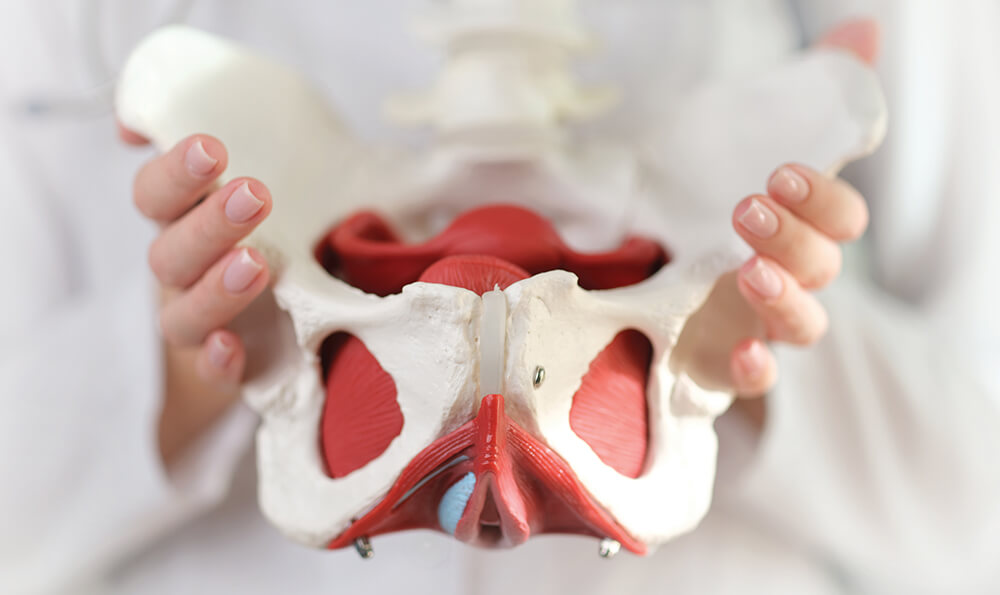
To find and feel your pelvic floor, it’s a good idea to review your anatomy at least a little. The pelvic floor is made up of soft tissues that line the pelvic cavity—our “floor.” The muscle fibers of the floor form and converge into the external sphincters. Beneath this imaginary surface layer are fibers that connect the space between the ischial tuberosities. The ischial tuberosities are those “buddies” that press against us and cause pain when we ride a bike. Beneath this layer lies another, the deepest one, in which muscle fibers connect the pubic bone to the coccyx region.
Anatomically, it is a relatively complex system that is, in essence, perfect and fully adapted to the work it constantly performs. The pelvic floor performs many functions and is involved in numerous processes. If it’s working properly, we shouldn’t even be aware of it. It’s similar to breathing—when everything is working as it should, we don’t think about breathing. We don’t think about the pelvic floor either; we aren’t particularly aware of it during the day. When we need to go to the bathroom to have a bowel movement during the day, it simply happens.
However, as soon as a problem arises in the pelvic area, that area becomes the focus of our attention. Suddenly, we become more aware of this area; we pay closer attention to it, checking to see if anything down there hurts, feels tight, or causes irritation. Common symptoms of pelvic floor dysfunction include abdominal bloating, painful menstruation, or pain during intercourse; problems with urination and bowel movements may also occur.
You can easily examine and feel your pelvic floor on your own. Simply insert one finger vaginally and try to contract your pelvic floor muscles. In other words, try to squeeze the finger inside your vagina with your muscles, pull it inward, and then relax. This will give you at least a basic idea of whether you’re able to consciously contract and then relax these muscles. Both of these actions—contracting and relaxing—are very important.
You can exercise your pelvic floor during everyday activities; all you need to do is become aware of your pelvic floor, visualize that area, and try to perform a few conscious contractions. As you exhale, pull your pelvic floor—all three layers—inward, and then relax as you inhale. You can also train your pelvic floor for endurance by contracting all the muscles, holding the contraction for a few seconds, and then releasing. This way, you strengthen and tone your pelvic floor and bring it under conscious control. It’s a good idea to work on your pelvic floor in various positions—not just while lying down, but also while sitting, standing, and even standing on one leg.
There is a MYTH circulating among people that we also exercise our pelvic floor muscles when we interrupt urination—that is, when we stop the flow of urine. This is a very unhealthy practice and can lead to serious problems. Trying this once is fine to see if you can do it, but doing this regularly can cause real problems because it disrupts the micturition reflex. When you feel the urge to urinate, your brain signals that you need to empty your bladder, and at that moment, you need to completely relax, relax your pelvic floor, dilate the urethra, and fully empty your bladder. If you regularly disrupt this reflex, you may develop urgency syndrome.
SÚVISIACE TÉMY
→ Šestonedelie
→ Panvové dno
→ GravidityFyzio
→ KidsFyzio